
Hardware matched to purpose
Mission-critical AI fails in surprising ways when the compute underneath it was chosen from a catalogue. The use case should specify the hardware, not the other way round.
Read articleMost AI pilots end in a slide deck. A good pilot ends in a decision: scale it, change it or stop it. That only happens if success is defined before the first line of code.

The phrase “pilot purgatory” exists for a reason. Organisations run proof after proof, each one technically impressive, and few of them ever reach production. When we look at why, the cause is rarely the technology. It is that nobody agreed in advance what the pilot was supposed to prove.
Ambition is good. Scattering effort across ten use cases is not. We advise institutions to pick one or two pilots tied to a decision that is frequent, costly and owned by a specific leader. If the pilot succeeds, someone should be eager to scale it.
Every pilot we run has its measures written down before work begins. They are always in the language of operations, not data science:
If you cannot say in one sentence what would make the pilot a failure, you are not ready to start it.
Pilots are often run on convenient sample data and then struggle with the real thing. We prefer the opposite: a smaller scope, but on approved production data, networks and hardware. The results are slower to get and far more believable.
Before a pilot begins, sketch what production would look like: who would use it, what it would connect to, how it would be secured and supported. Many pilots that “worked” were never designed to survive contact with real operations.
Want to explore how this applies to your organisation? We share our approach with qualified organisations in a private briefing.

Mission-critical AI fails in surprising ways when the compute underneath it was chosen from a catalogue. The use case should specify the hardware, not the other way round.
Read article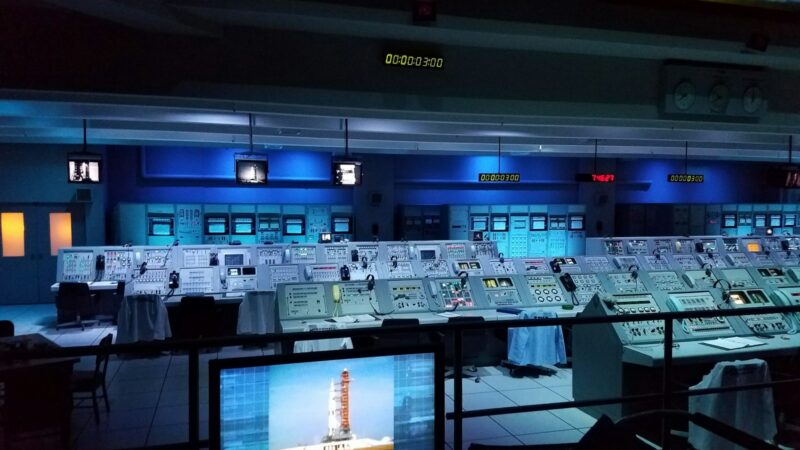
A single operator may be responsible for 10 to 15 screens. Attention collapses within minutes. Good AI starts with that human reality.
Read article
Twenty months of writing about data, AI and sovereignty point to one idea: an intelligence layer that turns what an enterprise already owns into foresight, under its own control.
Read article