
Offline by default
The places where AI matters most are often the places where the network is weakest. Critical systems should keep working when the connection doesn't.
Read articleCameras, drones and sensors record almost everything. Almost none of it is ever analysed. That is a design problem, not a staffing problem.

Walk into most control rooms and you will see the same picture: walls of screens, a handful of operators and an archive growing by the hour. By our estimate, more than 95% of the vision data captured by cameras, drones and sensors is never analysed. It is recorded, stored and forgotten until something goes wrong.
When it does go wrong, the footage becomes evidence. It tells you what happened. It rarely helps you stop it from happening.
The instinctive response to a security or safety gap is to add coverage. More cameras, higher resolution, longer retention. Each of these makes the archive bigger without making the system any smarter. The bottleneck was never the lens. It was attention.
Enterprises built millions of eyes. What they did not build was the brain behind them.
The unwatched 95% is not noise. It contains the slow build-up of a crowd, the vehicle that circles the same block three times, the small leak that becomes a shutdown and the patient who has not moved for too long. These are patterns, and patterns are exactly what machines are good at noticing when people are not looking.
Sending every stream to a distant data centre is expensive, slow and often impossible at a border post, a substation or a ship at sea. The more promising approach is to process video close to the camera, keep what matters and raise an alert in seconds. It also keeps sensitive footage where it was captured.
The goal is not to replace the people in the control room. It is to make sure that when they look up, they are looking at the right screen.
Want to explore how this applies to your organisation? We share our approach with qualified organisations in a private briefing.
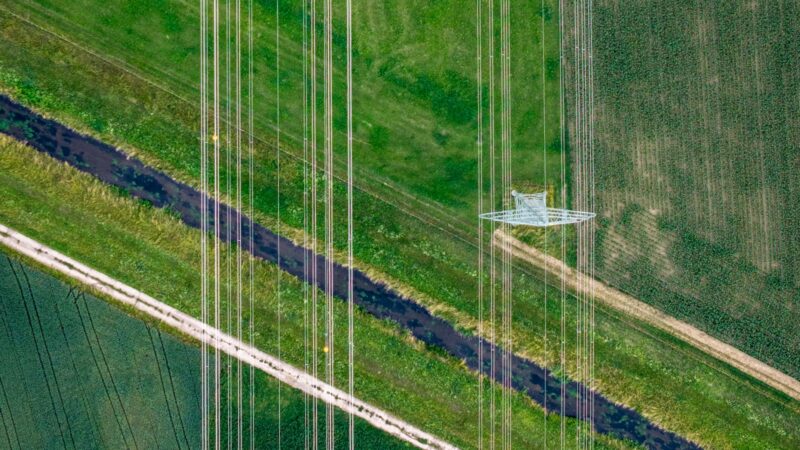
The places where AI matters most are often the places where the network is weakest. Critical systems should keep working when the connection doesn't.
Read article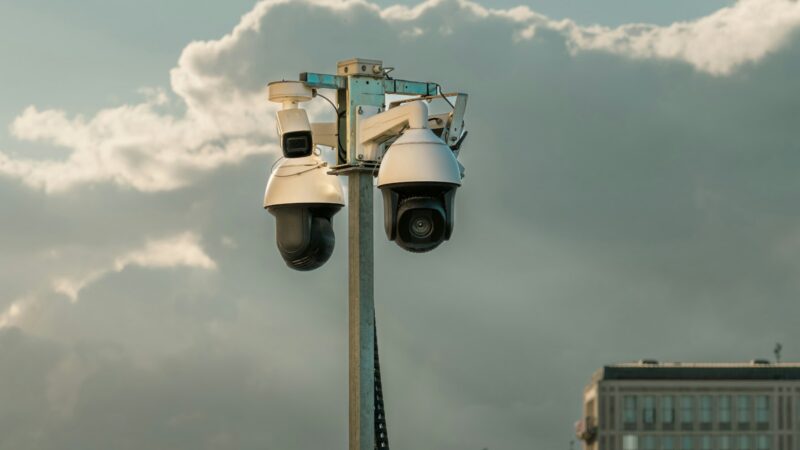
Most safety systems are built to explain incidents after the fact. The shift that matters is from reaction to anticipation.
Read article
Twenty months of writing about data, AI and sovereignty point to one idea: an intelligence layer that turns what an enterprise already owns into foresight, under its own control.
Read article