One meaning for every record
Before an organisation can trust its AI, it has to agree on what its own data means. The data dictionary is the least glamorous and most important AI investment.
Read articleOur data foundation framework gives organisations the base they need to use data with speed, trust and control. It brings together five layers: secure ingestion, unified storage, processing, governance and access.
Ingestion, storage, processing, governance and access designed together rather than bolted on.
Every request verified, every action recorded, every dataset classified.
Data quality checks and lineage frameworks so every number can be traced and trusted.
Pre-built accelerators and reference architectures that shorten time to value.
Real-world decisions draw on many kinds of data at once. A robust foundation takes each of them in, in its own rhythm, and makes them work together.
ERP, transactional and legacy systems, captured in batch or by change-data-capture.
Reports, forms, spreadsheets, PDFs and scanned records, made searchable.
Video, event and message streams processed continuously as they arrive.
Telemetry from meters, machines, vehicles and devices, at high frequency.
Satellite and drone imagery, GIS layers and location feeds.
Weather, partner, open and inter-agency data, under agreed terms.
Data fusion combines signals that each tell part of the story. It only works when the foundation underneath has already cleaned, aligned and linked them.
Batch, change-data-capture and streaming connectors bring every source in securely.
Formats, units and codes are cleaned and checked for quality on arrival.
Records are lined up in time and place, so readings from different sources can be compared.
A shared data dictionary and ontology recognise the same asset, person or event across systems.
Signals are combined, with confidence scores, into one picture that is more complete than any source alone.
Trusted, governed data flows to dashboards, APIs, AI models and agents in real time.
AI built on a weak foundation scales its mistakes. Built on a strong one, every new use case is faster, cheaper and more trustworthy than the last.
Sensor, video and event streams never stop. The foundation must absorb millions of events without falling behind.
Real-time decisions need data that is minutes old at most, not last night's batch.
Quality checks and lineage on every record, so a enterprise-scale decision can be traced to its source.
Edge stores and redundancy keep critical systems running when links or sites fail.
Access rules, classification and encryption applied once, enforced everywhere.
Each new use case starts on data that is already clean, linked and governed.
The same discipline, adapted to each sector's data, rules and risks. See all industries.
One governed foundation shared across departments, so every programme reads the same trusted data.
Explore GovernmentContinuous meter, SCADA and sensor streams fused with asset and weather data for real-time operations.
Explore Energy & UtilitiesVehicle, inventory and movement data joined in real time for forecasting and readiness.
Explore Transport & LogisticsOne accountable team covers the full lifecycle, with security and governance built in from the first sprint.
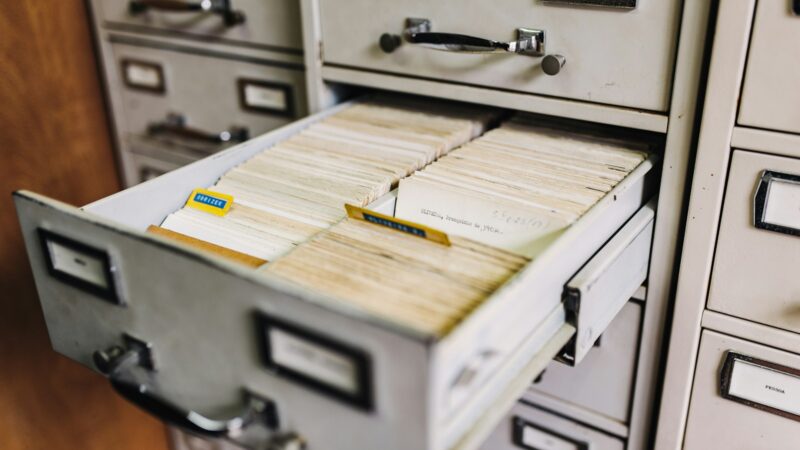
Before an organisation can trust its AI, it has to agree on what its own data means. The data dictionary is the least glamorous and most important AI investment.
Read article
The word sounds academic. The idea is practical: describe your world once, precisely, so that every system and every model understands it the same way.
Read article
Scaling AI without a management system is like scaling a factory without quality control. Standards such as ISO/IEC 42001 give institutions a practical framework.
Read articleTell us the problem and the data you have. We'll propose a measured pilot on approved data, networks and hardware.